

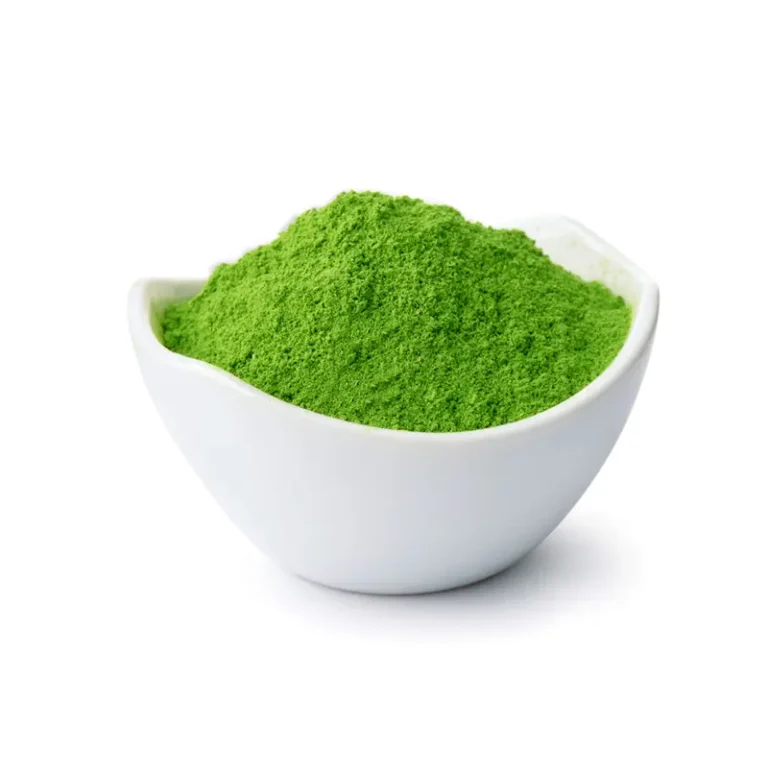
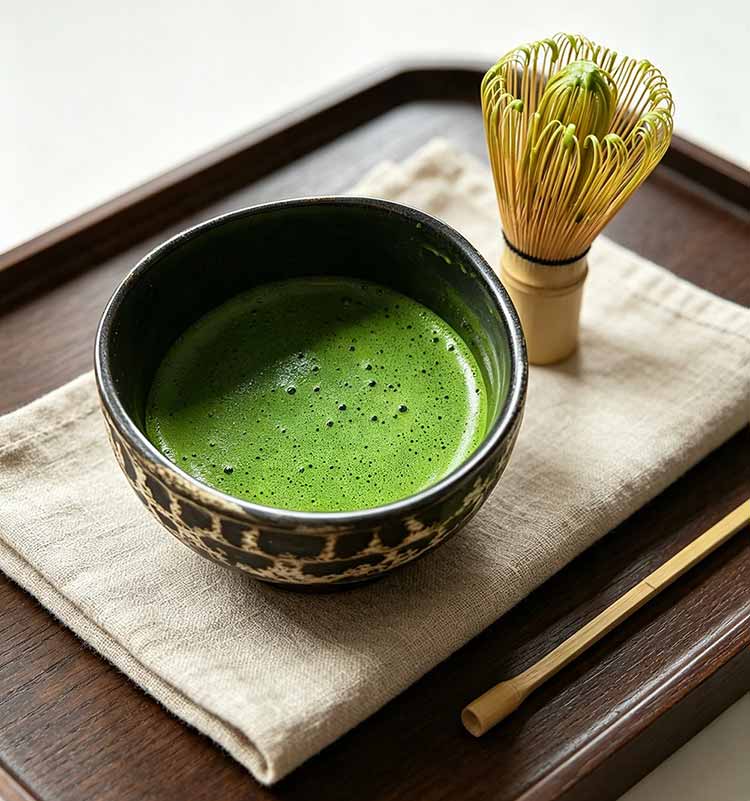
Matcha is a finely ground green tea powder prized for its vibrant color, delicate umami flavor, and rich nutritional profile. From traditional Japanese tea ceremonies to modern lattes, smoothies, and baked goods, matcha’s quality depends heavily on how it is stored.
A common and important question among matcha drinkers, café owners, and suppliers is:
Can you store matcha in an airtight container — especially a plastic one?
The short answer is yes, but with limitations.
The long answer depends on the container material, storage duration, and environment.
This guide explains how airtight containers affect matcha, when plastic is acceptable, and what professionals recommend for preserving matcha at its best.
Can You Store Matcha in an Airtight Container?
Yes — matcha should always be stored in an airtight container.
However, not all airtight containers are equally suitable for matcha.
An airtight container for matcha must protect against four major enemies:
- Air (oxygen) – causes oxidation and bitterness
- Light – degrades chlorophyll and dulls color
- Moisture – leads to clumping and flavor loss
- Heat – reduces aroma and active compounds
While airtight sealing is essential, the material of the container determines how well these risks are controlled.
Why Proper Matcha Storage Matters
Matcha is more sensitive than loose-leaf tea because it is a fine powder with a large surface area. Improper storage can cause matcha to:
- Turn yellowish or brown
- Lose its fresh, grassy aroma
- Develop bitterness or flat taste
- Lose nutritional value (catechins, L-theanine)
Even high-quality Japanese matcha can degrade quickly if stored incorrectly.
Plastic Airtight Containers for Matcha: Pros and Cons
Plastic containers are widely used for food storage, but matcha requires extra consideration.
Pros of Plastic Airtight Containers
- Lightweight and cost-effective
Convenient for daily use and short-term storage. - Good sealing options
Many plastic containers come with silicone gaskets that help block air and moisture. - Practical for cafés and home use
Easy to open frequently during service.
Cons of Plastic Airtight Containers
- Less protection from light
Most plastic containers are translucent unless specifically designed to be opaque. - Potential air permeability over time
Plastic is more permeable than metal or glass, which can slowly allow oxygen exchange. - Static electricity
Fine matcha powder can cling to plastic walls, making handling inconvenient. - Quality concerns
Low-grade plastics may absorb odors or leach chemicals, affecting flavor.
When Is a Plastic Airtight Container Acceptable for Matcha?
A plastic airtight container for matcha can be acceptable only under specific conditions:
- Short-term storage (up to 1–2 weeks)
- Daily-use matcha in cafés or home kitchens
- BPA-free, food-grade plastic
- Opaque container or stored inside a dark cabinet
- Tight, well-fitted airtight lid
In these scenarios, plastic containers are used mainly for convenience, not long-term preservation.
When Plastic Is NOT Recommended
Avoid plastic containers if you are storing:
- Matcha for longer than one month
- Ceremonial-grade or premium Uji matcha
- Bulk or wholesale quantities
- Matcha in warm or humid environments
For these cases, professional-grade storage is essential.
Best Containers to Store Matcha
| Container | Light Protection | Oxygen Barrier | Long-term Storage | Recommended |
|---|---|---|---|---|
| Plastic | Fair | Fair | ❌ | Short-term |
| Tin | Excellent | Excellent | ✅ | Best |
| Dark Glass | Excellent | Excellent | ✅ | Very Good |
| Vacuum Bag | Excellent | Excellent | ✅ | Bulk Storage |
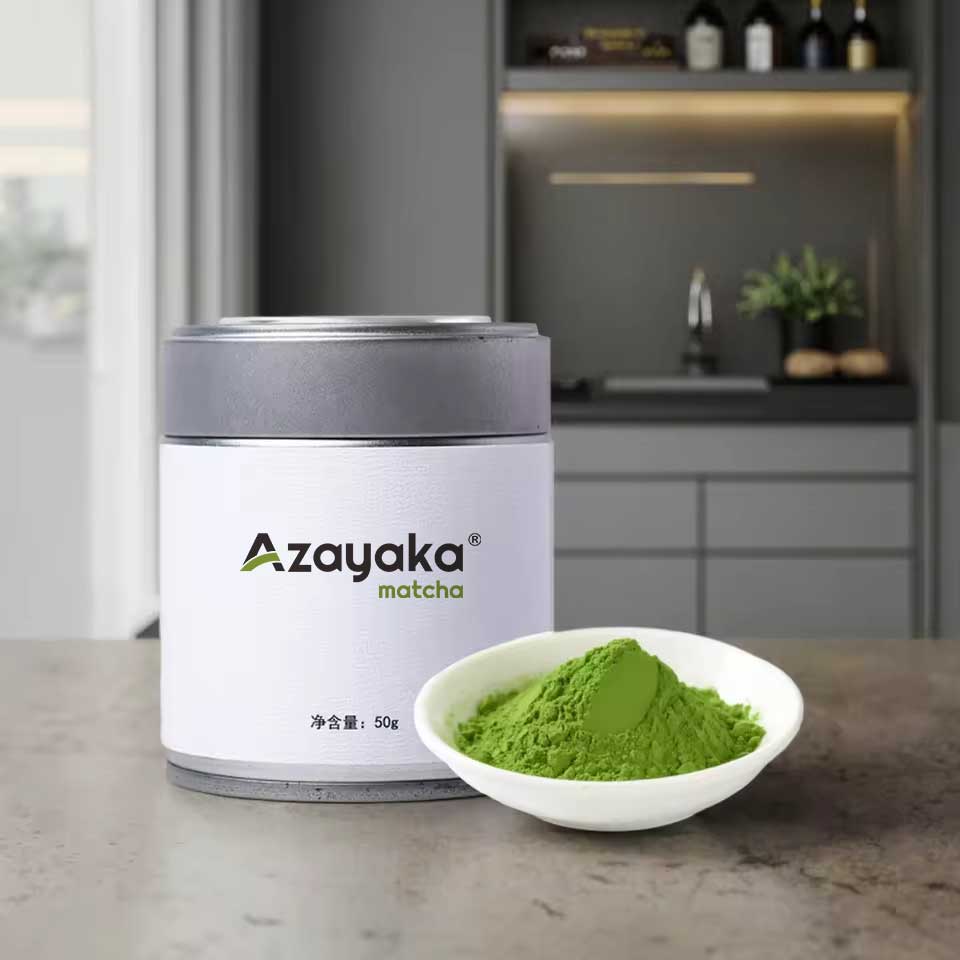
For most consumers, an airtight tin container is the best option because it blocks light, limits oxygen exposure, and prevents odor absorption.
Professional tea producers typically package premium Japanese matcha in sealed metal tins for this reason.
1. Tin Cans (Traditional & Industry Standard)
Tin cans are the most widely recommended airtight containers for matcha.
Why they work best:
- Completely opaque (blocks light)
- Excellent oxygen barrier
- Stable and odor-resistant
This is why matcha producers in Japan traditionally package matcha in sealed tin cans.
2. Airtight Glass Containers (Dark or Amber)
Glass is impermeable to air and moisture, making it a strong option if properly designed.
Best choice:
- Dark or amber glass
- Airtight lid
- Stored in a cool, dark place
Clear glass should be avoided unless kept away from light.
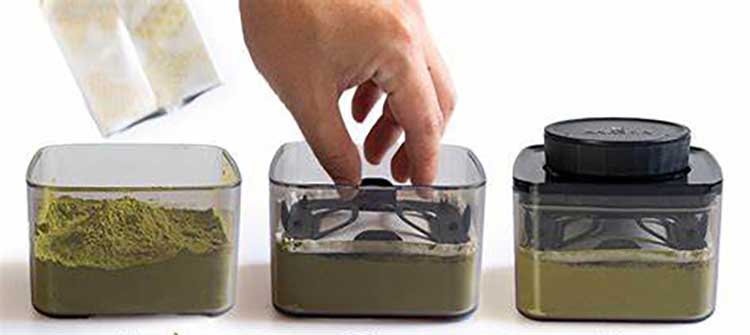
3. Vacuum-Sealed Packaging (Bulk Storage)
For wholesalers and long-term storage, vacuum-sealed bags offer superior protection by removing oxygen entirely.
Once opened, the matcha should be transferred to a tin or dark airtight container.
4. High-Quality Plastic Containers (Limited Use)
If plastic must be used, choose containers specifically designed for tea storage:
- BPA-free
- Thick, opaque walls
- Airtight silicone seals
These are suitable for short-term handling, not preservation.
Expert Insight from Matcha Suppliers
From a supplier’s perspective, improper storage is one of the most common reasons matcha loses quality prematurely.
In professional settings, bulk matcha is typically vacuum-sealed and stored cold. Small amounts are transferred into airtight tins for daily use. Plastic containers are used only temporarily during preparation or service — never for long-term storage.
This approach helps preserve color, aroma, and flavor consistency, especially for premium-grade matcha.
How to Store Matcha Properly
Regardless of container type, follow these essential guidelines:
- Keep it cool: Ideal temperature is 4–16°C (40–60°F)
- Avoid humidity: Always use a dry spoon
- Seal immediately: Minimize air exposure after opening
- Limit handling: Frequent opening accelerates oxidation
- Store away from odors: Matcha easily absorbs surrounding smells
Should You Store Matcha in Plastic?
An airtight container is mandatory for matcha, but plastic is not the ideal material for long-term storage.
Plastic airtight containers can work for short-term, daily use, provided they are high-quality and light-resistant. For preserving matcha’s vibrant color, aroma, and flavor over time, tin cans or dark glass containers remain the best choice.
By choosing the right airtight container and storage conditions, you ensure that every bowl or cup of matcha delivers the freshness and quality it’s known for.
FAQ
Can matcha be stored in plastic?
Yes, but only for short-term storage.
Should matcha be refrigerated?
Unopened matcha can be refrigerated if sealed.
Opened matcha should stay in an airtight container.
How long does matcha stay fresh?
unopened:12 months opened:1–2 months
Does plastic ruin matcha?
Food-grade plastic does not ruin matcha, but it provides less protection than tin.
Why is matcha stored in metal tins?
Metal blocks UV light and oxygen better than plastic.
What happens if matcha is exposed to air?
It oxidizes, loses chlorophyll, and becomes yellow and bitter.


This was super helpful! I’ve always wondered if plastic containers were safe for matcha. I didn’t realize how much light and air could affect the flavor. Thanks for the clear tips—definitely switching to a tin or glass jar now!