
Matcha is becoming an increasingly popular ingredient in commercial food and beverage products. From matcha cookies and ice cream to lattes, chocolates, and ready-to-drink beverages, food manufacturers are finding new ways to incorporate this distinctive Japanese green tea powder into their product lines.
However, choosing matcha for commercial production is different from buying matcha for personal consumption.
Food manufacturers need more than an attractive green color or a pleasant taste. They must consider product consistency, flavor, application suitability, quality documentation, organic certification, packaging, and a supplier’s ability to support ongoing bulk orders.
So, how do you choose the right food-grade matcha powder supplier?
This guide explains the key factors businesses should evaluate before selecting a matcha supplier and how to find a wholesale partner that can support their production needs.
1. Understand What Food-Grade Matcha Means
Food-grade matcha generally refers to matcha powder selected for use as an ingredient in food and beverage manufacturing.
Unlike matcha marketed primarily for traditional tea preparation, matcha used in commercial production may be incorporated into recipes that include milk, sugar, flour, chocolate, dairy ingredients, or other components.
Common applications include:
- Matcha cakes, cookies, and pastries
- Ice cream, gelato, and frozen desserts
- Matcha chocolate and confectionery
- Matcha latte and beverage mixes
- Smoothies and ready-to-drink beverages
- Packaged food products and specialty ingredients
The right matcha depends on the intended application, recipe, processing conditions, and desired flavor and appearance.
When evaluating a commercial matcha product, ask the supplier for a product specification sheet. This helps your purchasing and product development teams understand the product’s characteristics and determine whether it is suitable for your application.
2. Choose the Right Matcha Grade for Your Application
Not every matcha powder performs the same way in food manufacturing.
Different grades and product specifications can produce different results in terms of flavor, color, aroma, and overall performance.
Culinary-Grade Matcha
Culinary-grade matcha is commonly considered for recipes in which matcha is combined with other ingredients.
Potential applications include:
- Bakery products
- Cookies and cakes
- Ice cream and desserts
- Chocolate and confectionery
- Matcha-flavored food mixes
Manufacturers should evaluate the powder in their actual recipes rather than relying on grade names alone.
Premium and Higher-Grade Matcha
Higher-grade matcha may be considered for products where the tea’s natural flavor, aroma, and color are more prominent.
Potential applications include:
- Premium matcha beverages
- Matcha latte products
- Specialty dessert products
- Premium confectionery
The best choice depends on the product’s positioning, target price, recipe, and sensory requirements.
Tip for manufacturers: Request samples of suitable matcha options and conduct application testing before committing to a large-volume purchase.
3. Evaluate Matcha Quality Beyond Color
Color is one of the first things buyers notice when evaluating matcha, but it should not be the only selection criterion.
A reliable supplier should be able to provide product information and documentation to help manufacturers evaluate the ingredient.
Consider the following factors:
Color
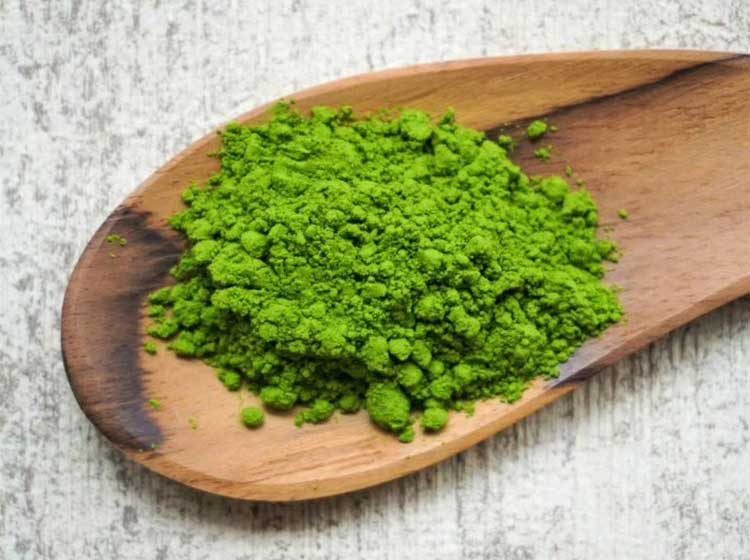
Matcha is often associated with a vibrant green appearance. However, color alone cannot determine product quality or suitability.
Evaluate how the powder looks both before and after incorporation into your recipe.
Flavor
Matcha can have vegetal, grassy, savory, umami, or bitter notes depending on its characteristics and formulation.
For food manufacturing, the desired flavor profile depends on the finished product.
For example, a matcha powder used in a sweet bakery product may need to provide a recognizable tea flavor without overwhelming the other ingredients.
Aroma
A fresh, characteristic tea aroma may be important in products where matcha is a prominent ingredient.
Manufacturers should evaluate aroma during both ingredient inspection and finished-product testing.
Particle Size and Mixing Performance
Powder characteristics can affect how matcha disperses during production.
Depending on the application, manufacturers may need to test:
- Mixing behavior
- Powder dispersion
- Appearance after mixing
- Texture in the finished product
- Performance under their specific processing conditions
These tests help determine whether a particular matcha product is appropriate for a production process.
4. Request Product Specifications and COA Reports
Product documentation is an important part of commercial ingredient sourcing.
Before purchasing bulk matcha powder, food manufacturers should request relevant product information and quality documents.
Useful documents may include:
- Product specification sheet
- Ingredient and product origin information
- Certificate of Analysis (COA)
- Relevant quality or laboratory test reports
- Microbiological test results, where applicable
- Heavy metal test results, where applicable
- Allergen information
- Shelf-life and storage recommendations
A Certificate of Analysis can help buyers review relevant quality or testing information for a product or batch.
However, the exact information included in a COA may vary. Manufacturers should confirm that the available documentation meets their internal quality requirements and applicable regulations.
At Azayaka Matcha, B2B buyers can request product specification sheets, COA documentation, and available testing reports to support their product evaluation and purchasing process.
5. Verify Organic Matcha Certification
Organic certification can be an important purchasing consideration for food brands and manufacturers.
However, buyers should distinguish between a supplier describing a product as organic and a product supported by valid organic certification.
For products marketed as USDA organic in the United States, buyers should verify the relevant certification information and whether the product and supply chain are covered by the applicable certification.
Before purchasing, consider asking:
- Is the specific matcha product certified organic?
- Which certification applies?
- Is the certificate current?
- Does the certification cover the relevant product and handling activities?
- Can supporting documentation be provided?
Azayaka Matcha offers organic matcha products supported by certification documentation. B2B buyers can request the relevant documents to review whether the products meet their purchasing and certification requirements.
If organic certification is a requirement for your finished product, verify the documentation before making a purchasing decision.
6. Test Matcha Samples Before Bulk Purchasing
A product specification sheet and laboratory documentation are useful, but they cannot replace testing matcha in your own recipe.
For food manufacturers, sample evaluation is an important step before committing to a commercial order.
When testing matcha samples, consider:
- Color and appearance in the finished product
- Flavor strength and bitterness
- Aroma
- Mixing and dispersion
- Performance during your production process
- Consistency with your desired product profile
For example, a matcha powder that works well in a latte may perform differently in baked goods or frozen desserts.
Testing samples allows your product development team to compare options and select matcha that fits your formulation.
Azayaka Matcha provides samples for B2B customers to evaluate before placing wholesale orders. Contact the team to discuss suitable product options and sample availability.
7. Evaluate Bulk Supply Capacity and Packaging
A matcha product may perform well in a sample, but commercial production requires a dependable supply arrangement.
Before selecting a bulk matcha powder supplier, evaluate the following:
Order Quantities
Ask about available order sizes, minimum order quantities (MOQ), and whether the supplier can support your expected purchasing volume.
Packaging Options
Packaging requirements vary by manufacturer.
Depending on the available options, buyers may need to consider:
- Bulk ingredient packaging
- Sealed inner packaging
- Packaging suitable for repeated production use
- Custom or private-label packaging
Confirm the available sizes and packaging specifications directly with the supplier.
Supply Consistency
For manufacturers with ongoing production schedules, consistent product specifications and supply planning are important.
Ask how the supplier manages repeat orders and whether product specifications can be maintained across shipments.
Lead Times and Delivery
Confirm estimated production and shipping lead times before scheduling commercial production.
Delivery arrangements may depend on order quantity, destination, inventory, and shipping method.
8. Consider OEM and Private Label Matcha Services
For brands planning to launch their own matcha products, working with a supplier that offers OEM and private-label services can simplify product sourcing and brand development.
Private-label matcha may be relevant to:
- Food and beverage brands
- Specialty tea companies
- Retail product businesses
- Matcha drink brands
- Distributors developing their own product lines
Before choosing an OEM or private-label partner, discuss:
- Available matcha products and specifications
- Packaging formats
- Branding and labeling requirements
- Minimum order quantities
- Production and delivery timelines
- Available product documentation
Azayaka Matcha offers OEM and private-label services for businesses interested in developing matcha products under their own brands.
Contact the team to discuss your product concept, packaging requirements, and wholesale needs.
9. Compare Suppliers Based on More Than Price
Wholesale matcha pricing is important, but the lowest price does not necessarily represent the best purchasing decision.
Manufacturers should compare suppliers using several factors:
| Evaluation factor | What to consider |
|---|---|
| Product suitability | Is the matcha appropriate for your application? |
| Flavor and color | Does it meet your product requirements? |
| Specifications | Are product specifications available? |
| Quality documentation | Can the supplier provide COA and relevant reports? |
| Organic certification | Can the supplier provide valid supporting documents? |
| Samples | Can you test the product before ordering? |
| Bulk pricing | Does pricing work for your production volume? |
| Supply capacity | Can the supplier support repeat orders? |
| Packaging | Are the available formats suitable for your operation? |
| OEM / Private Label | Can the supplier support your branding requirements? |
A supplier that understands commercial applications and can provide relevant documentation makes it easier for buyers to evaluate products and plan their sourcing.
10. Questions to Ask a Food-Grade Matcha Powder Supplier
Before choosing a supplier, prepare a list of questions to evaluate product suitability and purchasing requirements.
Here are some useful questions:
- What matcha grades and product specifications do you offer?
- Which matcha products are suitable for bakery, beverage, and dessert applications?
- Can you provide product specification sheets?
- Can you provide a Certificate of Analysis (COA) and relevant testing reports?
- Do you offer certified organic matcha products?
- Can I request samples for product testing?
- What are your minimum order quantities?
- What bulk packaging options are available?
- Can you support repeat wholesale orders?
- Do you offer OEM or private-label services?
A professional supplier should be able to explain its product options, available documentation, and purchasing arrangements clearly.
11. Find a Matcha Supplier for Your Food Manufacturing Business
Choosing the right food-grade matcha powder supplier involves more than comparing prices.
Food manufacturers should evaluate product suitability, flavor, color, specifications, quality documentation, organic certification, samples, packaging, and the supplier’s ability to support commercial orders.
Taking the time to test samples and confirm purchasing requirements can help reduce ingredient sourcing risks and support more consistent production.
Azayaka Matcha offers wholesale matcha options and B2B support for businesses exploring commercial matcha supply.
Our services include:
- Product specification sheets for commercial matcha options
- COA documentation and available testing reports
- Samples for B2B product evaluation
- Organic matcha products with certification documentation
- OEM and private-label services
Whether you are sourcing matcha for cafés, beverage brands, bakeries, or food manufacturing, our team can help you explore suitable product and supply options.
Looking for a food-grade matcha powder supplier?
Explore Azayaka Matcha Wholesale to learn more about our wholesale offerings and request a quotation.
Frequently Asked Questions
What is food-grade matcha powder?
Food-grade matcha powder is matcha intended for use as an ingredient in food and beverage applications. Buyers should review product specifications and confirm suitability for their intended manufacturing process.
What is the best matcha grade for food manufacturing?
The best grade depends on the application, recipe, flavor requirements, desired color, and production process. Culinary-grade matcha is commonly evaluated for baked goods, desserts, and other recipes, while higher-grade options may suit products where matcha flavor is more prominent.
How do I choose a reliable bulk matcha supplier?
Compare product specifications, samples, quality documentation, available packaging, minimum order quantities, supply consistency, and communication. Confirm that the supplier can meet your purchasing and production requirements.
Can matcha suppliers provide a Certificate of Analysis?
Yes. Azayaka Matcha can provide COA documentation and available testing reports for B2B customers. Buyers should review the documents to confirm that the information meets their product and quality requirements.
Can I request matcha samples before placing a wholesale order?
Yes. Azayaka Matcha provides samples for B2B customers to evaluate product suitability before placing wholesale orders. Contact the team to discuss available options.
Does Azayaka Matcha offer certified organic matcha?
Yes. Azayaka Matcha offers organic matcha products supported by certification documentation. Buyers can request the relevant documents to verify the certification applicable to their selected product.
Does Azayaka Matcha offer private-label matcha?
Yes. Azayaka Matcha offers OEM and private-label services for businesses interested in developing matcha products under their own brands. Contact the team to discuss product options, packaging, and order requirements.
Can I buy matcha powder in bulk for food manufacturing?
Yes. Azayaka Matcha offers wholesale matcha options for commercial buyers. Contact the team to discuss product specifications, samples, order quantities, and supply arrangements.