
Temperature is one of the most impactful yet under‑documented variables when working with matcha. Unlike steeped loose‑leaf tea, you consume the full milled tencha leaf powder. Water temperature directly controls compound extraction, color retention, umami balance, and the stability of heat‑sensitive molecules including L‑theanine and EGCG.
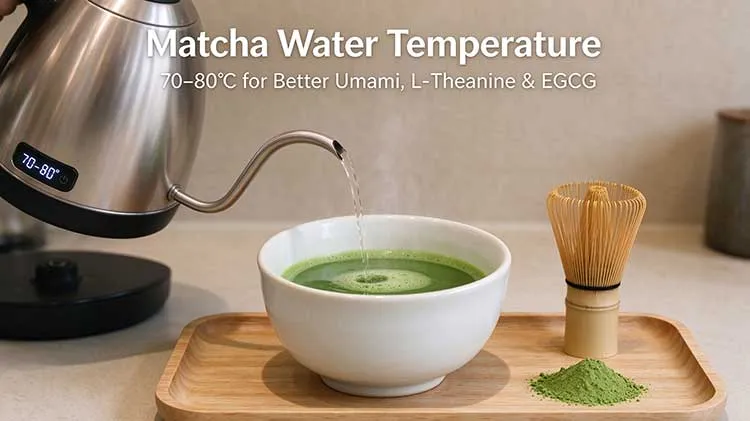
The Tea Research Institute of Kyoto Prefectural Agriculture, Forestry and Fisheries Technology Center publishes official public guidance for matcha brewing, recommending 70‑80°C (158‑176°F) as the core working range for whisked matcha. This research‑backed window applies both for home‑scale preparation and commercial beverage operations.
Quick takeaway: 70‑75 °C delivers sweeter, gentler umami for ceremonial‑grade matcha; 75‑80 °C works for lattes and culinary‑grade beverage bases. Avoid sustained boiling‑temperature contact with premium matcha powder.
Matcha Temperature By Application
| Use Case | Target Water Temp °C (°F) | Practical Notes for Brewers & Formulators |
|---|---|---|
| Ceremonial Usucha (thin plain matcha) | 70‑75 °C (158‑167 °F) | Maximize L‑theanine and sweet umami; minimize harsh catechin extraction |
| Ceremonial Koicha (thick matcha) | 70‑75 °C (158‑167 °F) | Low heat prevents over‑extraction in high‑powder‑ratio thick tea |
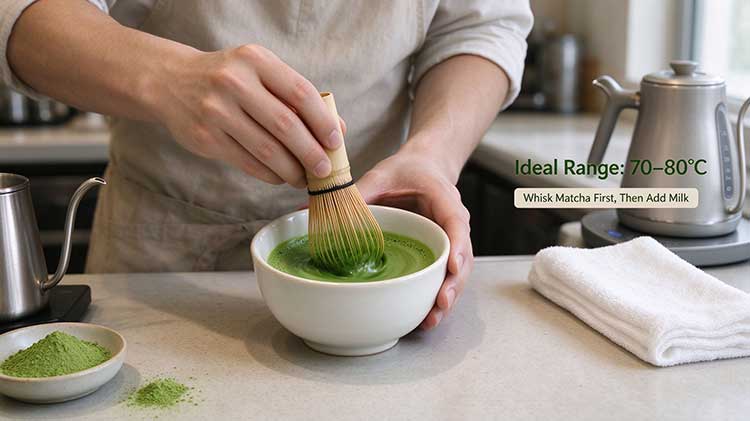
| Matcha latte concentrate / café shot | 75‑80 °C (167‑175 °F) | Slightly warmer for full flavour; create matcha paste first before adding steamed milk |
| Culinary matcha for beverage drinks | 75‑80 °C (167‑175 °F) | Robust leaf profile tolerates upper end of range; milk offsets minor astringency |
| Baking / thermal food processing | >85 °C (>185 °F) | Expect chlorophyll colour shift, partial EGCG thermal degradation; normal for baked goods |
| Iced / cold‑shake matcha | 10‑38 °C (50‑100 °F) | Excellent nutrient retention; requires vigorous shaking or whisking for full powder dispersion |
What Happens At Different Temperature Levels
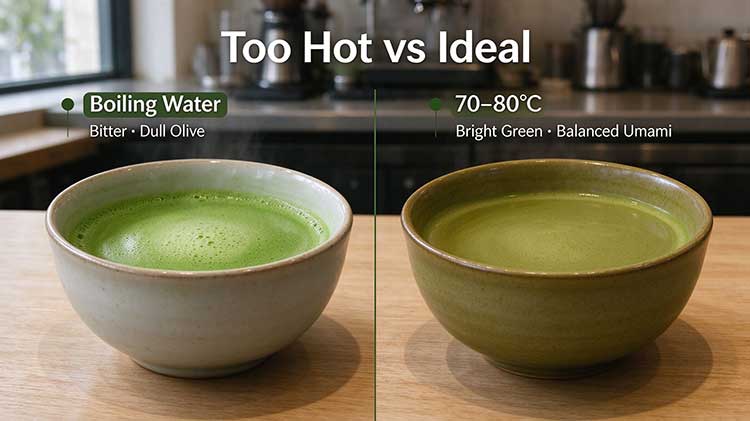
Above 85 °C / Boiling Water Risk
Water near or at boiling triggers three well‑documented changes in matcha powder:
- Accelerated extraction of bitter catechins and tannins, overpowering natural umami sweetness.
- Thermal stress on chlorophyll: bright emerald green shifts toward dull olive‑yellow.
- Degradation of heat‑sensitive compounds including portions of L‑theanine and EGCG.
This is the most common failure point for new baristas and home users. Boiling water does not “ruin matcha” in a chemical sense, but it dramatically changes sensory experience — producing harsh, grassy, astringent cups even when using high‑grade raw material.
Below 70 °C: Under‑extraction Risk
Water cooler than 70 °C struggles to fully hydrate fine matcha particles. Common symptoms include clumping at the bowl bottom, weak aroma, poor foam formation and flat flavour. Cold‑iced matcha avoids heat‑driven bitterness but requires extra mechanical mixing to prevent sediment.
The Science Behind The 70‑80 °C Sweet Spot
Within 70‑80 °C you achieve balanced extraction: enough thermal energy to suspend powder and unlock umami from L‑theanine, without aggressively pulling excessive bitter catechins. Published extraction studies show higher water temperature dissolves higher total phenolic content; sensory panels and Kyoto official guidance prioritize balanced flavour over maximum total‑compound yield.
Important note: Most lab extraction research uses filtered liquid extracts. In real‑world whisked matcha you ingest the entire leaf powder, so lab numbers serve as directional reference rather than absolute drinking‑experience metrics.
No‑Thermometer Practical Methods
For locations without variable‑temperature kettles, following the traditional method referenced in Kyoto’s matcha guide:
- Bring water fully to rolling boil.
- Decant boiled water into a second vessel and allow to cool.
- Small volume cools faster than a full kettle.
- Quick shortcut: pour water back‑and‑forth between two cups several times for rapid heat loss.
- Test target window: 70‑80 °C before mixing with matcha powder.
Critical Guidance for Café Operators & Wholesale Buyers
Many home‑brewing guides overlook real‑world commercial constraints. These operational tips apply when you formulate menus with bulk matcha inventory:
- Always prepare your matcha concentrate (shot) at controlled temperature before combining with steamed milk. Do not steam milk together with dry matcha powder, repeated high‑heat exposure accelerates colour fading and bitter notes.
- Ceremonial‑grade matcha is economically inefficient for high‑heat baking applications; select purpose‑formulated culinary‑grade matcha for bakery and heat‑processed food projects.
- Seasonal adjustment: Kyoto tea institute suggests slightly cooler water in summer and marginally warmer water in winter to compensate for bowl and ambient temperature difference.
- Re‑heating already‑prepared matcha beverage amplifies bitterness and colour degradation. For consistent quality in‑store, prepare matcha‑base fresh to‑order.
FAQ
Q: Does cold‑shaken iced matcha retain more L‑theanine and EGCG? A: Cold processing avoids thermal degradation of heat‑sensitive compounds. Nutrient retention is excellent; however full powder suspension requires mechanical agitation (shaking / whisking).
Q: Can I apply the same temperature rules for all AZMatcha product grades? A: Our ceremonial series performs best on 70‑75 °C; culinary beverage‑grade works reliably at 75‑80 °C for latte bases. For custom thermal‑stable formulation requirements, reach out to our technical wholesale team.
Q: My matcha still tastes bitter even at correct water temperature. A: Bitterness can come from many factors besides temperature: powder dosage, sifting practice, matcha shelf‑life and harvest quality. Temperature is only one key variable.
Disclaimer: This article summarizes published thermal properties of matcha compounds and tea‑institute brewing guidance. It is not medical advice. Taste perception and caffeine tolerance vary by individual.