
This concise overview compiles key peer-reviewed research on shade-grown matcha, simplified for matcha lovers, café operators, and product formulators. Unlike steeped tea, matcha means consuming the entire milled tea leaf — so all its naturally occurring compounds enter your system.
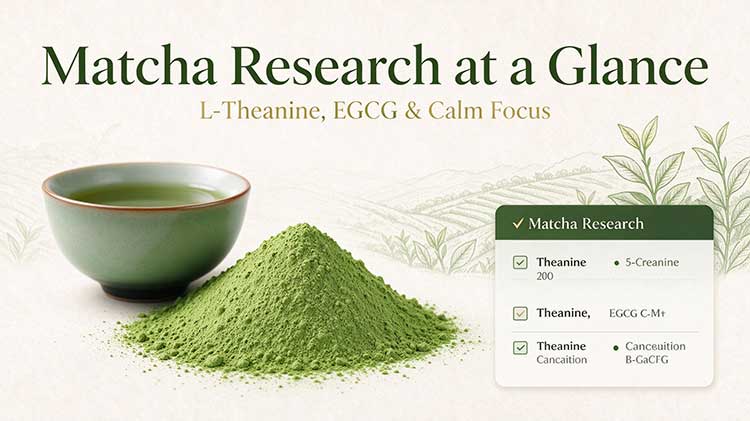
The Two Key Bioactive Compounds
Two signature substances set premium shaded matcha apart from other teas and coffee: L-theanine and EGCG.
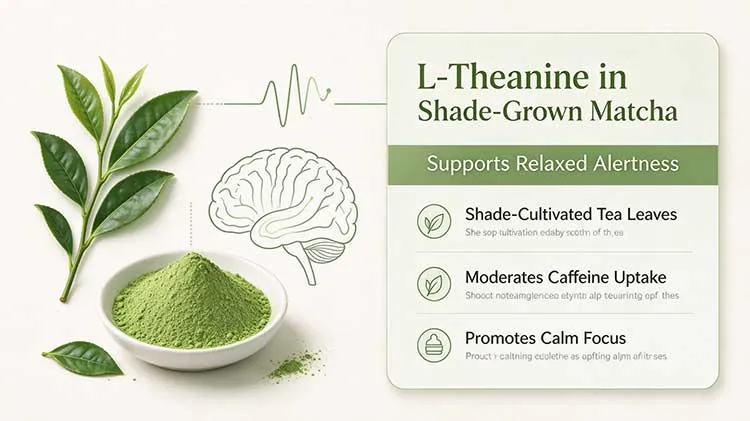
L-Theanine L-theanine is a unique amino acid found heavily in shade-grown camellia sinensis. It encourages a state of relaxed alertness by supporting alpha brain wave activity. Most importantly, it moderates how quickly your body absorbs caffeine. This synergy is the core reason matcha feels different from coffee.
EGCG (Epigallocatechin Gallate) EGCG is a potent catechin antioxidant abundant in young, shaded tea shoots. Shading amplifies its concentration. It is widely studied for its antioxidant properties associated with consistent, moderate tea consumption.
Steady Energy — Without the Caffeine Jitters
Coffee delivers a rapid caffeine surge with no natural L-theanine buffer. For many people, this sharp spike creates jitters: shakiness, restlessness, nervousness, and a sharp energy crash later.
Matcha’s natural pairing of caffeine and L-theanine slows caffeine uptake. Instead of a sudden wired rush, you get gradual, sustained focus and alertness.
Important disclaimer: Matcha still contains caffeine. Highly caffeine-sensitive people may still experience discomfort with large servings. Results vary individually.
Why Shade Cultivation Makes the Difference
High-grade matcha tea bushes are covered with shading fabric for 20 to 30 days before harvest. Reduced sunlight slows leaf growth. The plant produces more chlorophyll and L-theanine to adapt. This process creates the vivid emerald green colour, rich umami taste, and balanced calming profile that ceremonial-grade matcha is known for.
Grade Difference for Wholesale Buyers
- Ceremonial Grade: Higher L-theanine, delicate umami, designed for drinking plain with hot water.
- Culinary Grade: Robust flavour and heat-stable colour, formulated for lattes, baking, confectionery and beverage production.
When sourcing wholesale matcha, always ask your supplier for harvest timing, shading records, and third-party lab testing reports for purity.
Final Research Takeaway
Studies consistently show that combining L-theanine with caffeine supports attention and working memory, while reducing the nervous stimulation often linked to caffeine alone. Paired with EGCG’s antioxidant benefits, shaded matcha offers a balanced alternative for those seeking focus without harsh jitters.