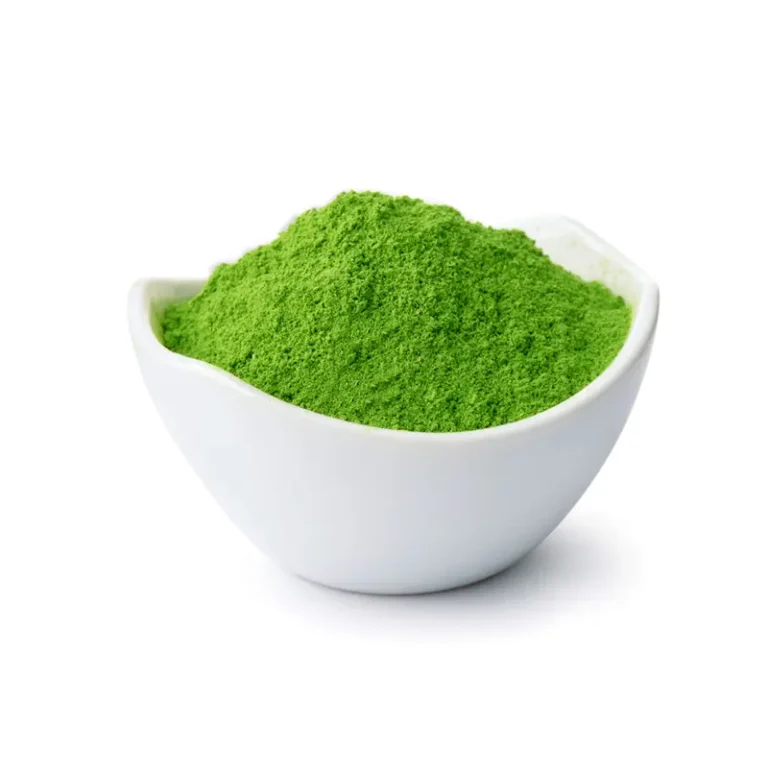

You do not always need a kitchen scale to make a good cup of matcha. If you are at home and do not have one nearby, a regular teaspoon can be a simple way to measure matcha powder.
The key is to use the same method each time. Matcha is a very fine powder, and the amount that fits into a spoon can vary depending on how tightly it is packed. For everyday preparation, a level teaspoon is usually a practical starting point.
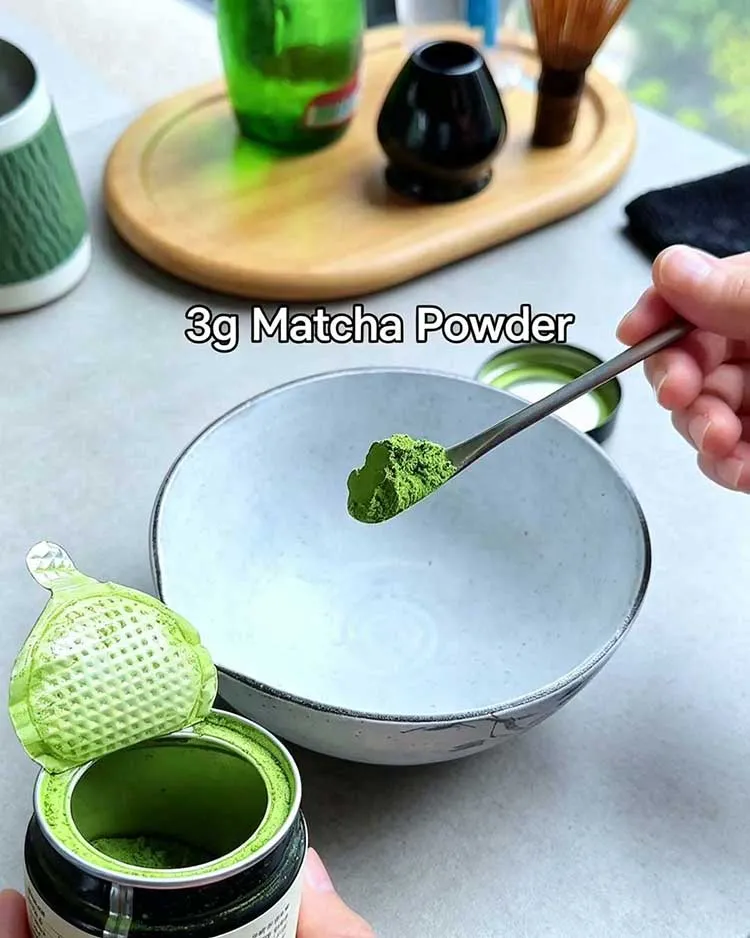
How Much Matcha Is in a Teaspoon?
A level teaspoon of matcha is generally around 2–3 grams, although the actual weight can vary.
The difference comes from several factors, including the density of the powder, how finely it is ground, and whether the spoon is level or heaped. For this reason, it is better to treat teaspoon measurements as an estimate rather than an exact conversion.
If a recipe calls for matcha by weight and you do not have a scale, start with a level teaspoon and adjust the amount based on the strength and flavor you prefer.
How to Measure Matcha With a Teaspoon
Measuring matcha with a teaspoon is simple:
- Use a clean, dry teaspoon.
- Scoop the matcha powder.
- Fill the spoon without pressing the powder down.
- Level the top with the back of a knife or another straight edge.
- Add the matcha to your bowl, cup, or shaker.
Try to use the same spoon and the same technique every time. This will give you more consistent results than using a different spoon or a heaped scoop each time.
Level Spoon or Heaped Spoon?
A level spoon is the better choice when you want a more consistent amount.
A heaped teaspoon can contain considerably more matcha, depending on how high the powder is piled. Two people can use the same teaspoon but end up with noticeably different amounts if one uses a level spoon and the other uses a large heap.
For this reason, recipes that use teaspoons should ideally specify whether the measurement is level or heaped.
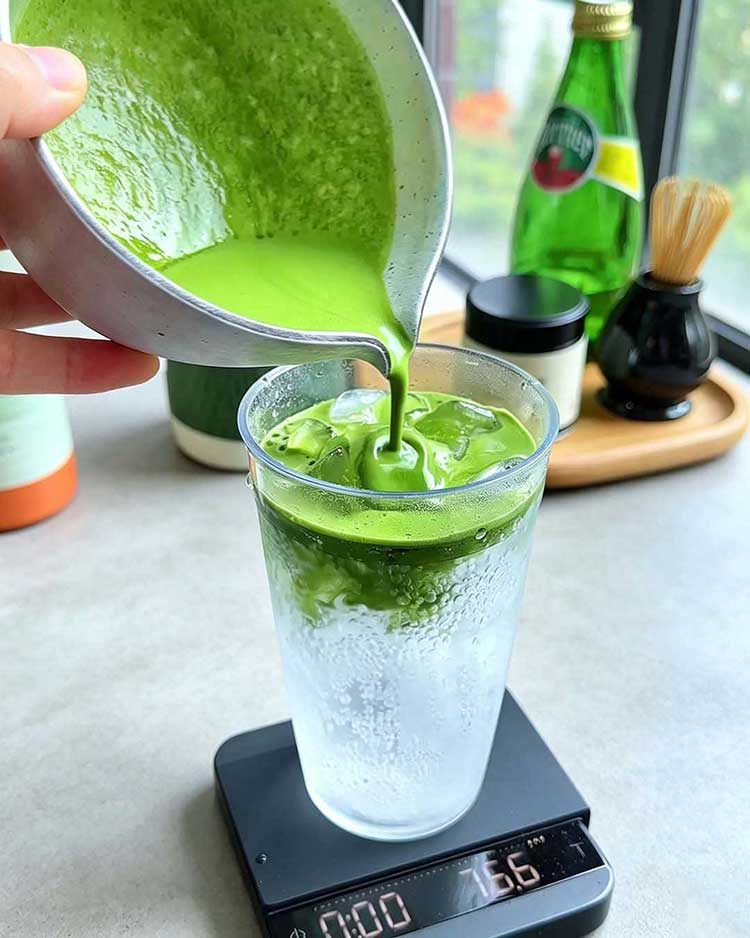
How Much Matcha Should You Use for a Matcha Drink?
For a traditional-style serving, many people start with about 1 teaspoon of matcha and adjust from there.
If you prefer a stronger flavor, you can increase the amount. For a lighter drink, use a little less.
For a matcha latte, the amount may also depend on the amount of milk, water, ice, and other ingredients in the drink. A stronger matcha powder may require less powder to achieve the flavor you want.
There is no single amount that works for every recipe. Your preferred strength and the type of matcha you are using both matter.
Does Matcha Grade Affect How Much You Need?
It can.
Different matcha products can have different flavor profiles, colors, aromas, and textures. Ceremonial-style matcha is often prepared with water and enjoyed for its delicate flavor, while other grades are commonly used in lattes, smoothies, baking, and other recipes.
When matcha is used with milk, sugar, fruit, or other strong flavors, a different amount may be needed to make the matcha flavor stand out.
Rather than relying only on a fixed measurement, it is useful to start with a consistent amount and adjust the recipe to suit the application.
What If You Need an Exact Measurement?
If consistency is important, a digital kitchen scale is the best option.
This is especially useful when:
- Developing a matcha recipe
- Comparing different matcha products
- Preparing drinks for customers
- Calculating ingredient costs
- Producing food or beverages commercially
- Scaling a recipe from a few servings to a larger batch
For home use, a teaspoon can work well enough for everyday preparation. For commercial applications, measuring by weight provides much better consistency.
For example, if a café uses a specific amount of matcha in every latte, weighing the powder during recipe development can help establish a repeatable standard. Once the correct amount has been determined, staff can use a consistent measuring method during service.
A Simple Way to Stay Consistent
If you do not have a scale, consistency is more important than trying to achieve a perfectly exact measurement.
Use the same teaspoon, keep the spoon level, and avoid packing the powder down. If you are making matcha regularly, you can also compare your teaspoon measurement with a digital scale later and record the approximate weight.
This gives you a practical reference for future preparation.
Can You Measure Matcha With a Bamboo Scoop?
Yes. A traditional bamboo matcha scoop, often called a chashaku, can be used to portion matcha.
However, a chashaku is not designed to provide the same precise weight as a digital scale. The amount can vary depending on how the matcha is scooped and how full the scoop is.
For traditional preparation, this is usually not a problem. If you are developing a commercial recipe, weighing the matcha is still the more reliable approach.
You can measure matcha without a scale. For everyday use, a level teaspoon is one of the easiest options, with approximately 2–3 grams being a useful general estimate.
Keep in mind that matcha powder varies, so a teaspoon should not be treated as an exact gram measurement. If you need repeatable results, especially for a café, food business, or commercial recipe, measuring by weight is the better approach.
For home preparation, however, you can start with a level teaspoon, whisk, taste, and adjust until you find the balance you like.
FAQ
How many grams are in one teaspoon of matcha?
A level teaspoon of matcha is commonly around 2–3 grams, but the exact weight can vary depending on the powder and how it is measured.
Can I make matcha without a scale?
Yes. A level teaspoon or a traditional bamboo chashaku can be used for everyday matcha preparation.
Should I use a heaped or level teaspoon?
A level teaspoon is recommended when you want a more consistent measurement.
Is a teaspoon accurate enough for a café?
A teaspoon can be useful during recipe testing, but commercial operations generally benefit from measuring matcha by weight to maintain consistency between drinks.
How much matcha should I use for a latte?
There is no universal amount. Start with approximately 1 teaspoon and adjust according to the strength of the matcha, the amount of milk, and your preferred flavor.
Does matcha powder density affect the measurement?
Yes. Different matcha powders can have different densities, so the same volume measured with a teaspoon may not always have exactly the same weight.